This guide covers state of survival how to complete exploration stages with practical steps for mobile players.
Quick answer: Exploration stages are the game’s main solo progression track, sending your squad into areas that reward hero fragments, equipment and resources. Push as far as your squad can reliably clear, stop when a stage requires more power than you have, and go back to develop heroes rather than retrying endlessly. Each stage you clear unlocks passive rewards that keep paying while you are away.
Exploration is where a survival settlement game puts its single-player content. It gives you a reason to develop heroes beyond defence and a steady source of materials that do not depend on events.
The tempting mistake is to keep retrying a stage you cannot beat. The useful habit is to recognise the wall, improve the squad and come back.
How do exploration stages work?
Each stage is a fight against enemies scaled to its difficulty. Clearing it unlocks the next stage and usually grants a one-time reward plus a passive income tied to your furthest progress.
Stages are grouped into chapters or areas, and reaching a new area often unlocks additional systems or reward tiers.
Squad strength determines what you can clear, so progress is gated by hero development rather than by time or resources.
Some stages can be replayed for materials, which makes earlier content useful long after you have passed it.
It also helps to know that exploration rewards are front-loaded per stage. The first clear is worth far more than any replay, which is why pushing new stages beats farming old ones.
On this page
How far should you push?
| Situation | Action | Reason |
|---|---|---|
| Stage clears comfortably | Push the next one | Free progress and rewards |
| Stage clears narrowly | Stop and improve first | Narrow wins become walls quickly |
| Stage fails repeatedly | Develop heroes, then return | Retrying wastes stamina |
| New area unlocked | Push one more stage | Area rewards are usually better |
| Stamina is low | Wait rather than force | You will need it for events |
The second row is the useful signal. If a win felt close, the next stage will likely fail, and improving your squad first is faster than grinding attempts.
The third row is where players waste time. Repeated failure does not build power, and stamina spent failing is stamina unavailable for something productive.
Watch how much health your squad has left after a clear. A win at full health means you have room to push; a win on fumes means the next stage will be a wall.
Chapter boundaries usually raise difficulty noticeably, so expect a jump rather than a gradual increase when you enter a new area.
Save your strongest attempts for when you have full stamina rather than trickling attempts throughout the day. A concentrated push clears walls that scattered tries cannot.
What should you do when you hit a wall?
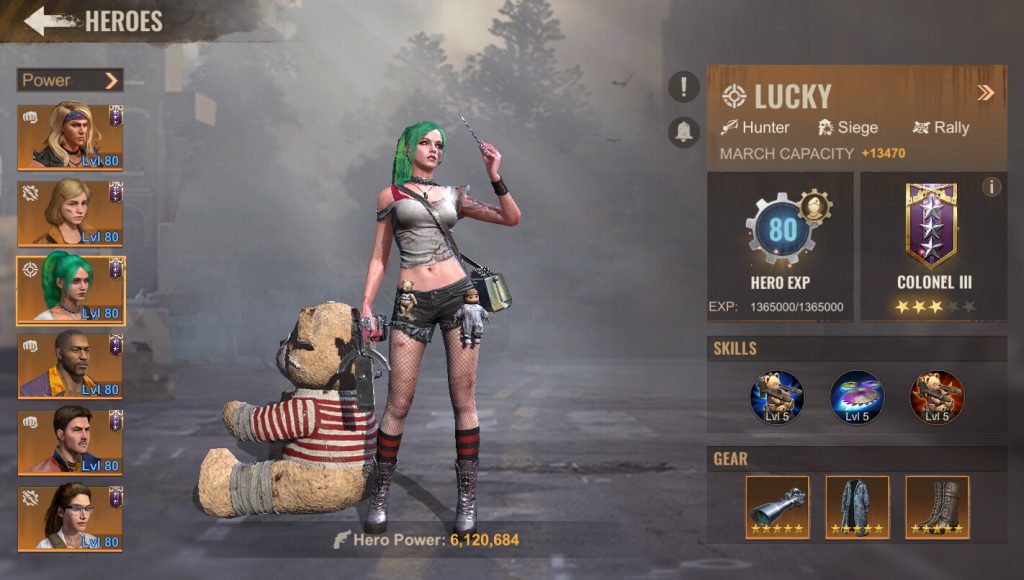
Check your squad’s development before assuming the stage is unfair. Levels, skills, equipment and fragments all contribute, and one neglected hero can cap the whole squad.
Look at what actually kills you. If the squad dies quickly, durability is the gap; if fights drag on, damage is. That diagnosis tells you which upgrade to buy next.
Then return after a day or two of development. Stages that felt impossible often clear comfortably after a single upgrade tier.
Diagnosing the gap is more useful than grinding. If one hero dies first every time, that hero is the weak link, and fixing them improves the squad more than upgrading anyone else.
How does exploration interact with other systems?
It feeds hero development by supplying fragments and materials, which in turn lets you push further. The two systems drive each other.
It also contributes to your settlement’s passive income, so pushing one extra stage permanently raises what you collect while offline.
Stamina connects them, since exploration consumes it. Spending all your stamina on failed attempts leaves nothing for events.
Events sometimes overlap with exploration, scoring stage clears or fragments collected. During those windows, pushing stages counts twice.
Exploration also gives you something productive to do while construction timers run, which makes it a good use of short sessions.
Should you replay cleared stages?
Yes, when you need the specific materials a stage drops. Replay is the most reliable way to farm fragments for a hero you are developing.
Prioritise stages whose rewards match a current need over stages you can clear fastest. The fastest stage is not useful if it drops something you already have in surplus.
Avoid replaying out of habit. If you do not need the reward, the stamina is better spent elsewhere.
Replay value is highest on stages that drop fragments for your main squad. Those are worth returning to even when you could clear something further along.
What should you avoid?
Do not retry a failed stage more than a few times. If it is not close, development is the answer rather than persistence.
Do not ignore exploration because events feel more rewarding. The passive income from stage progress pays every day, which events do not.
Do not spend premium currency to force a clear. The wall is a development signal, not a payment prompt.
Finally, do not neglect the heroes a stage rewards. Fragments from exploration are often the cheapest way to develop the squad that clears the next area.
A final habit is to note the stage number where you stalled. Coming back to it after a few days of development is far more efficient than wandering through content you have already cleared.
Push when you can, develop when you cannot, and the stages keep falling.
Frequently asked questions
What do exploration stages reward?
One-time rewards per stage plus passive income tied to your furthest progress.
Can I replay stages?
Yes, usually for materials and fragments.
Why can I not clear the next stage?
Your squad needs development. Check levels, skills and equipment.
Does exploration use stamina?
Yes, which is why failed attempts are expensive.
Is exploration worth prioritising?
Yes. Its passive rewards accrue daily and support everything else.
Exploration depends on squad strength, so hero development is the natural companion topic. The State of Survival overview covers the systems, and improving hero skills explains how to raise the power that clears stages.
Official game information: funplus.com.