This guide covers state of survival how to join an alliance with practical steps for mobile players.
Quick answer: Join an alliance as soon as the option unlocks, and pick an active group over a prestigious one. Alliances provide help with construction timers, access to alliance events and donations, and protection that solo play cannot match. A small group where people respond is worth more than a large one where nobody does, so check activity before committing.
State of Survival is a settlement builder wrapped around a survival theme, and alliances are the layer that turns it from a solo grind into something with events and shared rewards.
Joining costs nothing, so there is no reason to delay. The only real decision is which group to join, and that decision is about activity rather than size.
What does an alliance actually give you?
The first benefit is timer help. Members shorten your construction and research, and the saving compounds across every upgrade you start.
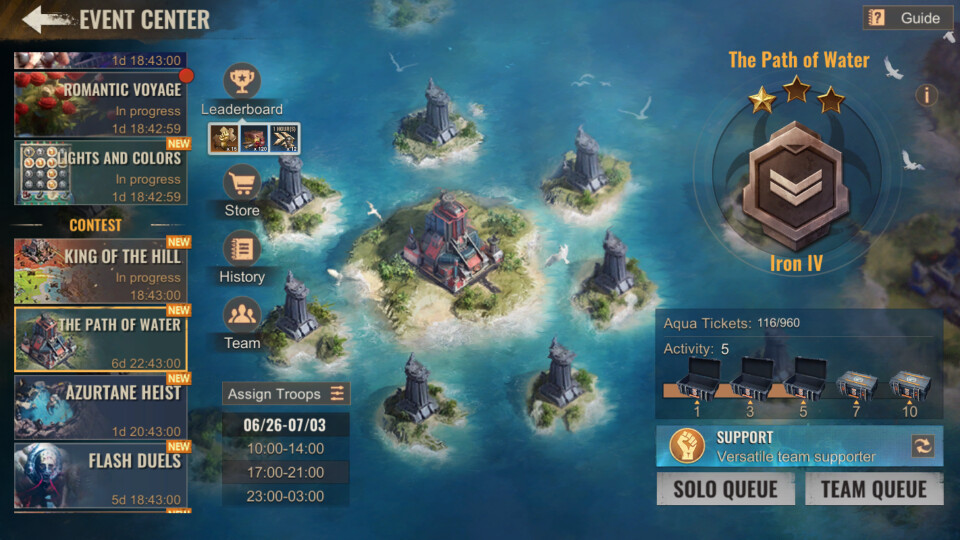
The second is events. Alliance events run on a schedule and pay rewards scaled to group participation, which includes materials that are slow to obtain alone.
The third is donations. Alliance donation systems let members contribute to shared bonuses, raising the whole group’s capabilities over time.
The fourth is protection. A visible tag discourages casual attacks, and reinforcement makes your settlement a less attractive target.
The fifth is information. Members at your level know which research matters and which events are worth the effort, and that advice is more current than any guide.
Donations also unlock over time, so a group that has been together for months has accumulated bonuses a new alliance cannot offer. That is a reason to join early rather than waiting until you feel ready.
On this page
How do you choose an alliance?
| Factor | Weight | Why it matters |
|---|---|---|
| Activity level | Highest | Help and events need responses |
| Event participation | High | The main reward source |
| Language and time zone | Medium | You need to be awake when they are |
| Size and ranking | Low | A number does not indicate helpfulness |
| Requirements | Low | Heavy obligations can outweigh benefits |
Activity is the only factor that really matters. A small group where members respond beats a large one where requests go unanswered for hours.
Check how a group behaves before joining by watching whether help requests are answered quickly. That single behaviour predicts most of what you will experience.
Ask whether the group runs events at a fixed hour. A predictable schedule makes participation far easier than one that starts whenever someone happens to log in.
Look at how many members are active in the last few days rather than at total membership. A group of thirty with five active players is effectively a five-person alliance.
What is expected of a member?
Click help for others, participate in events when you can, and contribute to donations if the system asks for them. Those three habits are the practical core of membership.
Most groups expect some participation, but the bar is lower than new players fear. Showing up consistently matters more than topping any leaderboard.
If you will be away, say so. Groups plan around known absences and resent unexplained silence far more than a short break.
Reciprocate what you receive. The help mechanic only works when everyone clicks, and members who never help stop receiving help in practice.
Keep communication short and useful. Alliance chat does not need conversation, but it does need coordination when an event starts.
Reading the group’s description matters too. Some alliances are competitive and expect daily attendance, while others are casual and only ask that you contribute when you can.
How do alliances affect progression?
Indirectly but substantially. Shorter timers mean faster upgrades, event rewards mean faster hero development, and donations mean shared bonuses you could not buy.
The compounding effect is measurable. Two players using identical hours will diverge noticeably if one is in an active alliance and the other is not.
Alliances also raise your combat ceiling by letting you join larger fights. Skipping them keeps your settlement smaller than it needs to be.
Protection matters as the account grows, because a settlement with resources is a target. Being in a group makes you a less appealing one.
There is also a defensive dimension as your settlement grows. Larger accounts attract more attention, and alliance reinforcement is often the difference between losing a stockpile and keeping it.
What should you avoid?
Do not join the largest group you can find without checking activity. A prestigious name with silent members is worse than a small responsive one.
Do not treat an alliance as a chat room. The useful ones coordinate gameplay rather than only talking.
Do not ignore your own contributions. Members who never help eventually stop receiving help, because reciprocity is the real mechanism.
Do not stay in a dead group out of loyalty. Leaving costs nothing, and an active group accelerates everything you are trying to do.
A final point on timing: joining before an event season begins gives you the full set of rewards, while joining mid-season usually leaves you ineligible for what has already been earned.
How do you get the most from membership?
Log in around event times when you can. Participation is often measured within a window, and being present at the right hour beats playing longer at the wrong one.
Ask questions when you are stuck. Someone has already solved your problem at your level, and their answer is usually more accurate than a general guide.
Set your help requests before logging off so they resolve while you are away. A request sitting unanswered overnight is a wasted opportunity.
Review your alliance occasionally. If events stop drawing members, the group has changed and you should look elsewhere.
Frequently asked questions
Do I need to spend to join a good alliance?
No. Active groups look for participation rather than spending.
Can I leave and rejoin?
You can leave, though rejoining the same group may depend on their policy.
What if my alliance is inactive?
Leave. A dead group costs you timer help and event rewards every day.
Are donations required?
Often encouraged and sometimes required. Check before joining.
Does alliance size affect matchmaking?
It can influence group content, but activity matters more than size.
Alliance membership feeds directly into event rewards, so preparation is the natural companion topic. The State of Survival overview covers the systems, and preparing for alliance events explains how to contribute without stalling your settlement.
Official game information: funplus.com.