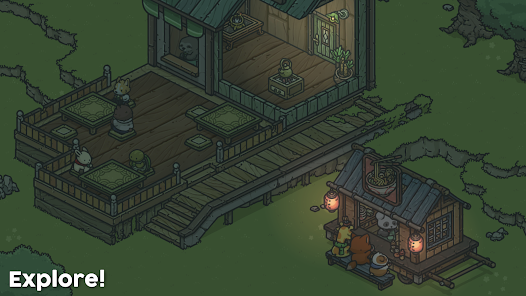
This guide covers tsuki odyssey how to find shop stock with practical steps for mobile players.
Quick answer: shop stock in Tsuki Odyssey rotates rather than staying fixed, so the way to find what you want is to check regularly rather than to save for a specific item. Visit the shops you care about as part of your routine, buy things when they appear, and accept that some items come around again later. Patience is the entire technique.
The shops are where carrots turn into a treehouse, and their rotating stock is what makes decorating a long project rather than a single shopping trip.
Understanding that rotation is not a problem to solve is the main thing. It is the pacing mechanism.
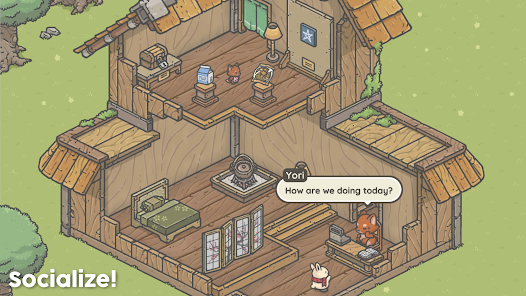
How does shop stock work?
Each shop offers a selection that changes over time rather than a fixed catalogue. Some items are common and some appear rarely.
That means you cannot simply decide to buy something and go get it. You have to be there when it is available.
The same item usually returns eventually, which is why missing it is not a disaster.
It is a carousel rather than a menu.
Once you understand that, the whole system becomes much less frustrating.
It also explains why decorating takes months rather than days. You are not limited by carrots alone; you are limited by what happens to be available.
That pacing is deliberate and it is what makes a finished treehouse feel earned.
If everything were always in stock, you would buy it all in a week and the project would be over.
The rotation is the game giving you something to look forward to.
On this page
How often should you check?
As part of your normal routine. If you are opening the game to collect carrots and check the farm, look at the shops too.
There is no need to check more often than you play. The stock does not refresh fast enough for that to matter.
A quick look per session is plenty.
Players who check constantly are optimising something that does not reward it.
The rotation is slow by design.
There is a practical way to think about checking frequency. If you open the game once a day, check the shops once. If you open it three times, check once and let the other visits be for other things.
Constant checking produces no advantage and makes the game feel like a chore.
The stock will still be there next session, or it will not, and either way nothing is lost.
Should you buy when you see something?
If you want it and can afford it, yes. Waiting for a better moment usually means waiting for it to come around again.
That is the opposite of the advice for large purchases, where saving makes sense.
For small decorations, buying on sight is reasonable because the alternative is an indefinite wait.
Keep a small reserve so you can act when something appears.
That reserve is the most useful thing you can hold.
It is worth being concrete about how much. Enough for one or two mid-priced items is plenty. Saving for weeks to afford something specific defeats the purpose, because the specific thing may not appear when you can finally pay.
Buy what you can, when you can, and let the rotation do its work.
The treehouse fills in over months rather than in a single spree.
What if you cannot afford something?
Let it go and wait for the next rotation. There is no way to hold an item, and no way to reserve it.
That is frustrating the first time and simply normal afterwards.
It also means you should not spend every carrot the moment you have it, because the item you want might appear tomorrow.
A modest buffer solves most of this.
Buy freely, but not to zero.
Do different shops have different stock?
Yes. Each shop has its own selection and its own character, which is why visiting several is worth doing.
That variety is part of what makes the village feel like a place rather than a menu.
It also means the item you want might be in a shop you have not visited recently.
Check more than one.
Wandering between them is part of the game’s pleasure.
It is also a good reason to explore rather than to optimise. Walking around the village to see what each shop has today is a pleasant way to spend five minutes, and it produces better results than checking a single location on a schedule.
The game rewards wandering, which is unusual and welcome.
What are the common stock mistakes?
Assuming stock is fixed. Saving indefinitely for something specific. Spending to zero and missing a rotation. And only ever visiting one shop.
The underlying mistake is treating the shops as a catalogue rather than as a rotating selection.
If you want a rule, check each shop once per session and buy what you like when it appears.
That approach produces a treehouse that grows steadily without any frustration.
It also keeps you from feeling stuck. A player who is waiting for one specific item is stuck; a player who buys whatever suits the room this week is always making progress.
Flexibility is the skill here, not patience with a shopping list.
Take what the shops offer and build something good with it.
Frequently asked questions
Does shop stock change?
Yes. Selections rotate rather than staying fixed.
Do items come back?
Usually, though the wait varies.
Should you save for a specific item?
Not indefinitely. Buy what you like when it appears.
How often should you check?
Once per session as part of your normal routine is enough.
Are all shops the same?
No. Each has its own selection and character.
Check the shops as part of your routine, keep a small buffer, and buy when something appears. You can also start from the Tsuki Odyssey hub.
Official game information: hyperbeard.com.