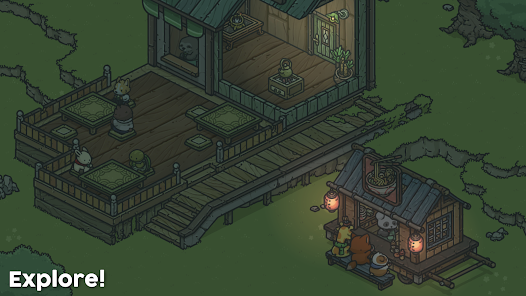
This guide covers tsuki odyssey how to manage the carrot farm with practical steps for mobile players.
Quick answer: manage the carrot farm by planting something every time you harvest, keeping the plot size to what you will actually check, and spending early upgrades on the farm rather than on decoration. Carrots are the game’s everyday currency, so a farm that keeps producing quietly funds everything else you want to do.
The farm is the most boring system in Tsuki Odyssey and the one that decides how quickly everything else happens.
It is also forgiving. Nothing dies, nothing expires, and a neglected plot simply produces less than it could.
That makes it a system you can approach calmly, which suits the game.
It is worth being honest with yourself about this, because the farm is the one system where optimism costs real progress. Players routinely plant twice what they check, then wonder why the balance is flat while the plots look busy.
How big should the farm be?
As big as you will reliably tend, and no bigger. A plot that sits unharvested is worse than a plot you never planted.
Start small and expand when you notice you are checking daily without effort.
If you find yourself skipping days, shrink the farm rather than pushing through.
The game will not punish a small farm, but an abandoned one quietly wastes seeds.
Most players overplant early because the plots are cheap and the ambition is high.
The better measure is how often you open the game, not how many plots you can afford.
A farm sized to your habit produces steadily; one sized to your enthusiasm produces in bursts and then stops.
Watch the shop for a week before committing a rotation. What sells steadily is usually the plain crop, while the interesting ones sit until a villager happens to want them. Growing for demand beats growing for curiosity.
On this page
What should you plant?
Carrots first, because they are cheap, reliable and used everywhere.
As you unlock other crops, plant what the shop or the villagers are currently interested in.
Seasonal crops are worth growing while they are available, since they tend not to return immediately.
Keep at least one plot on something basic so you always have a fallback.
If you are unsure, plant the thing you have run out of most recently.
Variety is nice, but consistency pays better in a small farm.
Try one new crop at a time rather than replacing your whole rotation at once.
There is also a compounding effect worth noticing: a faster cycle does not just mean more harvests, it means more chances to notice what is selling and adjust. Frequency gives you information as well as carrots.
When should you upgrade?
Early and often, because farming upgrades raise the floor of your income permanently.
An upgrade that increases yield pays for itself repeatedly, while furniture pays once and then just looks nice.
Prioritise upgrades that shorten the wait, since faster cycles mean more harvests per week.
Then take the ones that increase yield per harvest.
Leave decorative upgrades for later, once the farm is earning comfortably.
If two upgrades are close in price, take the one that speeds up the loop.
Frequency compounds; a single larger harvest does not.
If you are away for a stretch, come back and harvest everything before deciding anything else. The crops are your income, and spending a session’s attention elsewhere first means the farm sits idle for another day.
How does watering and tending work?
The demands are light. You will be prompted when something needs attention, and ignoring it costs growth time rather than the crop.
Check the farm when you check in for anything else. It takes seconds.
Do not overthink the timing. The game does not punish a late watering harshly.
If a plot looks stalled, water it and come back later.
Tending is a habit rather than a mechanic to master.
The players who do well simply look at the farm more often than the players who do not.
There is no trick beyond that.
How does the farm connect to everything else?
Carrots buy seeds, furniture, fishing gear and decorations.
Everything you want in the treehouse ultimately comes from the farm, which is why it is worth attention even when it feels dull.
A strong farm also makes the other activities optional rather than necessary.
If you want to spend a week fishing, the farm keeps funding it.
That flexibility is the reward for keeping it running.
Players who neglect the farm find themselves forced to grind whenever they want something.
Players who maintain it get to choose what to do with their time.
One quiet benefit of a healthy farm is that it removes urgency from everything else. Fishing becomes something you do because you want to, not because you need the carrots that day.
What are the common farm mistakes?
Planting more than you tend. The most common, and the easiest to fix by shrinking.
Buying furniture before upgrades. It feels good and slows everything down.
Hoarding seeds. Unplanted seeds are carrots that have stopped working.
Ignoring seasonal crops. They are often worth more while available.
Never checking. A farm you do not look at is a farm that earns nothing.
Most of those are about attention rather than knowledge.
Fixing them takes one session of tidying and a slightly smaller plot.
The farm will never be the most interesting part of the game, and it is not meant to be. It is the thing that quietly makes the interesting parts affordable.
Frequently asked questions
Do crops die if I forget them?
No. They wait, and you lose only the time you could have been growing something else.
Should I sell all my carrots?
Keep enough for seeds and for anything a villager or the shop is asking for.
Which upgrade is best first?
The one that speeds up the growing cycle, because more cycles means more harvests.
Can I farm without checking daily?
Yes, at a slower pace. A smaller farm suits infrequent visits.
Do other activities earn more?
Fishing supplements but does not replace the farm as a steady source.
For more, see earning carrots and farming upgrades. More coverage is on the Tsuki Odyssey hub.
Official game information: hyperbeard.com.