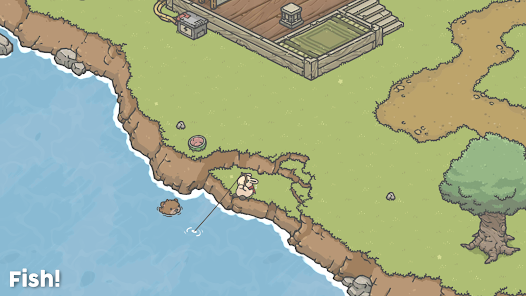
Quick answer: Tsuki Odyssey and Usagi Shima are both gentle games about a small place you improve over time, but they reward different things. Tsuki Odyssey gives you a home in a village with farming and seasons; Usagi Shima gives you an island to arrange so that rabbits visit. Choose the first for a lived-in home and a calendar, the second for a bigger canvas and a decorating focus.
The comparison comes up because both games occupy the same corner of the store and suit the same appetite. Neither has combat, neither punishes absence, and both expect short visits.
What separates them is scale and structure. One gives you rooms; the other gives you an island.
What is each game actually doing?
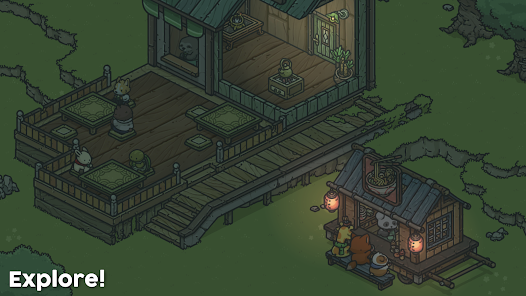
Tsuki Odyssey gives you a treehouse with rooms to furnish, a farm that produces carrots, and a village with shops and seasons.
Usagi Shima gives you an island with paths, areas and decorations, and rabbits who arrive based on what you have placed.
Both are about arranging a space. The difference is that one also has an economy and a calendar, and the other is almost purely arranging.
That shapes how each session feels.
One has a little management; the other has almost none.
That difference shows up fastest in what you do first when you open each game. In Tsuki Odyssey you collect from the farm and check the shops, because those are the systems that reset.
In Usagi Shima you look at what the rabbits are doing, because the rabbits are the content.
One session is about maintaining an economy; the other is about watching a place.
Both are pleasant and they use different parts of your attention.
On this page
How do they compare side by side?
| Tsuki Odyssey | Usagi Shima | |
|---|---|---|
| Space you arrange | A treehouse with rooms | An island with areas |
| Economy | Carrot farm and upgrades | Carrots from visiting rabbits |
| Time structure | Tied to the real calendar | No seasons, just visits |
| Collection | Furniture and seasonal items | Rabbits, mementos, a book |
| Pressure | None | None |
| Best for | Players who want a home | Players who want a canvas |
Which has more to manage?
Tsuki Odyssey. It has a farm with upgrades, an inventory to keep tidy, and shops whose stock rotates.
Usagi Shima has less of that. Its economy is simpler and its systems are fewer.
That makes it easier to pick up and harder to sink deep into.
If you want something to think about between visits, the first game gives you more.
If you want to just decorate, the second does not get in your way.
That is worth weighing carefully, because management sounds like a benefit and is not always one.
More systems means more to remember, more to check and more ways to feel behind.
If your reason for playing cozy games is to switch off, fewer systems is the better choice.
If your reason is to have something to fiddle with, more is better.
Which is better for decorating?
Usagi Shima, because the island is a bigger canvas and the decorating is the whole point rather than half of it.
You have paths, distinct areas and the freedom to lay things out spatially, which the treehouse’s rooms do not really allow.
Tsuki Odyssey is more intimate. You are furnishing rooms rather than planning a landscape.
Which is better depends entirely on which scale appeals to you.
Rooms reward attention to detail; an island rewards a broader vision.
Which feels more alive?
They are alive in different ways. Tsuki Odyssey feels alive because the village changes with the calendar and there are characters and a newspaper.
Usagi Shima feels alive because rabbits arrive and interact with what you built.
NoOne is a world with time passing; the other is a place responding to your choices.
That distinction is worth sitting with. A calendar makes a game feel like it exists without you, which is comforting in a way that is hard to explain.
Rabbits arriving makes a game feel like it noticed what you built, which is a different kind of comfort.
Both are good and they are not interchangeable.
If you have played both, you probably know within a day which one you missed when you were away from it.
Neither is more alive, but they satisfy different ideas of what alive means.
Most people have a preference within a day of playing both.
Can you enjoy both?
Yes, and they pair reasonably well because they ask for different things. One is a home to tend, the other is a space to arrange.
Neither punishes absence, so running both costs two brief check-ins a day.
The practical risk is that two routines start to feel like chores.
If that happens, let one lapse. Neither game will mind.
That flexibility is the advantage of the genre.
Frequently asked questions
Are they made by the same developer?
No, they are separate studios working in a similar space.
Which is better for a new player?
Tsuki Odyssey if you want a home and a routine, Usagi Shima if you want to decorate.
Do both have farming?
Only Tsuki Odyssey has a farm. Usagi Shima’s currency comes from visitors.
Which has more content?
Tsuki Odyssey has more systems; Usagi Shima has a larger space to fill.
Can you play both daily?
You can, though two routines can start to feel like chores.
Pick based on whether you want a home to tend or a canvas to fill, and either will serve you well. You can also start from the Tsuki Odyssey hub.
Official game information: hyperbeard.com.