This guide covers pocket city 2 how to improve citizen happiness with practical steps for mobile players.
Quick answer: To improve citizen happiness in Pocket City 2, fix the complaint the game is currently showing rather than adding services at random. Happiness responds to the basics first, power, water and road access, then to coverage from police, fire, health and education, and finally to parks, low pollution and jobs within walking distance. Deal with the specific complaint and the indicator moves.
Happiness is the game’s summary of whether your city actually works, and it is the least forgiving system once a city grows. A district can be fully serviced and still unhappy because it sits beside industry or has no park within reach.
What does happiness actually measure?
It is a summary of several things at once: whether a building has utilities, whether services cover it, whether the surrounding environment is pleasant, and whether residents can reach work and shops without a long journey.
That means the indicator can fall for reasons that have nothing to do with services. A well-policed district next to heavy industry is still an unpleasant place to live, and the game reflects that.
It also means happiness is a lagging signal. By the time the number drops visibly, the cause has usually been present for a while, which is why reading complaints early is more efficient than waiting for the indicator.
The practical approach is to treat happiness as a diagnostic tool rather than a score. It tells you something is wrong, and the complaint tells you what.
On this page
Which services matter most?
The ones that address the current complaint. Early on that is usually utilities and road access, because nothing else matters if buildings will not develop.
Once the district is functioning, police and fire coverage matter because they prevent incidents rather than fixing them afterwards. Health and education come next, and they tend to matter more as the population grows.
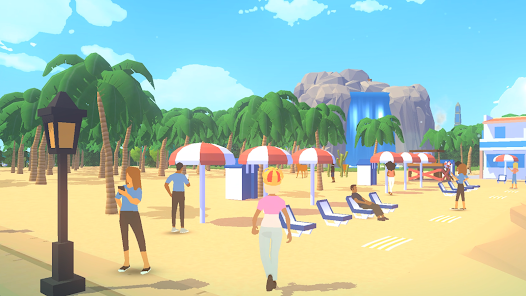
Parks are the cheapest happiness tool in the game and the one most often skipped. A small park in the middle of a residential block lifts a whole neighbourhood for very little upkeep.
Overlapping coverage is waste in every case. One service building placed where it reaches the most residents is better than two covering the same streets, and the saved money can serve a district with nothing.
How does pollution affect happiness?
Strongly, and permanently until you separate the source from the residents. Industry generates pollution, and housing inside a polluted area becomes unhappy regardless of how well it is served.
The fix is layout rather than spending. A road’s width of separation, a line of parks, or moving the industrial zone to the edge of the grid all work, and all are cheaper than adding services to compensate.
Pollution also drifts, so the boundary is not exactly the edge of the industrial zone. Watch which residential blocks are affected and place your buffer accordingly.
Pollution is why mixed zoning has limits. You want shops near housing, but you do not want factories there, and the difference between the two is what makes a city pleasant.
Does traffic affect happiness?
Yes, indirectly. Long commutes and congested routes make residents unhappy, and the effect shows up as a general complaint rather than a specific one about roads.
The cheapest fix is usually the zone mix. Shops inside residential districts remove journeys that would otherwise cross the city, which reduces traffic and improves happiness at the same time.
Adding a route is the second fix. A district with one access road queues, and the queue makes every journey in that district longer than it needs to be.
Widening is the last resort. It is expensive and it treats a shape problem as a capacity problem, which is why it often fails to move the indicator.
How do you keep happiness high as the city grows?
Grow in districts rather than spreading thinly. A compact district can be fully served by a small number of buildings, while a sprawling one needs duplicate coverage everywhere.
Add services as the population arrives rather than in advance. A police station built for residents who have not moved in yet is upkeep without benefit, and the money is better spent where people already live.
Keep parks distributed rather than concentrated. A single large park is a landmark, but several small ones lift more blocks for the same money.
And revisit old districts. A district that was happy at half its current size may now be under-served, and the complaint will tell you which service has fallen behind.
What are the common happiness mistakes?
Adding services without reading the complaint is the first. You can spend a great deal of money solving a problem the citizens were not complaining about.
Building industry next to housing is the second, and it is the most common cause of a district that never becomes happy.
Overlapping coverage is the third. Two identical buildings over the same streets are pure waste, and the money would have served an unserved area.
Ignoring traffic is the fourth. Happiness complaints that look vague are often about journey times rather than about any specific building.
Never building parks is the last, and it is the cheapest mistake to fix.
One useful routine is to open the complaint that is currently showing before you build anything. The game names the problem, and the named problem tells you whether you need a service, a road, a park or a separation between housing and industry. Building first and checking afterwards is how cities end up over-serviced and still unhappy.
It also helps to visit your unhappiest district in free roam. Walking the streets shows you what a coverage map cannot, such as a block cut off from the pavement or a park that sits on the wrong side of a main road from the people it was meant to serve.
Finally, accept that happiness will dip whenever you expand. A new district starts unserved by definition, and the dip is the cost of growth rather than a sign that something has gone wrong.
Frequently asked questions
Why is happiness low when every service is built?
Usually pollution or traffic. Both affect happiness without appearing as a missing service.
Do parks really matter?
Yes. They are the cheapest happiness building and they affect everything around them.
Should I build services before residents arrive?
No. Build them as the district fills, so the upkeep matches the population it serves.
Can happiness recover?
Yes. Fix the cause and the indicator moves back over the next few cycles.
Does tax rate affect happiness?
Yes. Higher taxes reduce it, which is why raising them to fund growth usually backfires.
For the environmental side, read how to manage pollution, or return to the Pocket City 2 hub.
Official game information: pocketcitygame.com.