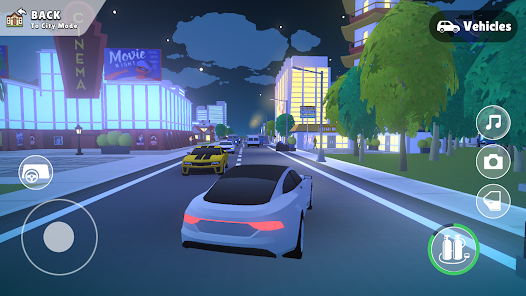
This guide covers pocket city 2 how to plan industrial zones with practical steps for mobile players.
Quick answer: To plan industrial zones in Pocket City 2, put them on the edge of the city with their own road leading out, well away from housing. Industry supplies the city and employs residents, but it generates pollution that drifts beyond its boundary, so the gap between industry and housing is the thing you are actually designing. Connect it to the road network without routing goods traffic through residential streets.
Industry is the zone players place first and regret later. It looks like the productive part of a city, and in the early game it is tempting to put it wherever there is space, which is usually next to the housing you just built.
Why does industry need its own space?
Two reasons: pollution and traffic. Industry generates pollution that affects residential blocks within range, and it generates goods journeys that are longer and heavier than commuter trips.
Both problems are solved by the same thing, which is separation with connection. Industry should be close enough to be reachable by workers and by goods, and far enough that neither the pollution nor the traffic reaches housing.
Putting it in the middle of the city, which is what the map usually invites, produces unhappy residents and congested streets at the same time.
Putting it on the edge with a road out gives you the jobs and the supply without either penalty.
On this page
Where exactly should it go?
On the perimeter, ideally along an edge where a road can leave the city without crossing it. That keeps goods vehicles out of residential streets and gives the zone a natural boundary.
Not between two residential districts, even if the geography suggests it. The pollution affects both sides, so you get two unhappy areas instead of one.
Not beside a planned park or recreation area. Those raise happiness, and pollution will fight them for the same ground.
A useful rule is to place industry where you would not want to live, then check on the map that no housing is within the drift.
How much industrial land do you need?
Less than beginners zone. Industry supplies the shops and employs residents, and a modest zone with good road access does that as well as a large one.
Over-zoning industry produces empty land that generates pollution anyway, which is the worst combination: a cost with no output.
Grow the zone as the city grows, watching whether shops are being supplied and whether residents have jobs. If both are satisfied, more industry adds pollution for no benefit.
The demand signal is commercial development. If shops are filling, industry is keeping up; if they are not, the supply chain needs attention.
How do you connect industry to the rest of the city?
With a road that leads out rather than through. The ideal is a connection to the perimeter road network, so goods can move without entering residential streets.
Workers still need to reach it, so the zone should be reachable from housing by a reasonable route, ideally without forcing every commuter onto the same road.
Give it enough junctions. A single access point to an industrial zone jams as soon as the zone fills, and by then widening is expensive.
Signals, if the game offers them, belong on the industrial road rather than the residential one, because that is where the volume is.
How does industry interact with happiness and growth?
It provides jobs, which residents want, and pollution, which they do not. The balance is entirely a question of distance.
Place it well and it is pure benefit: employment without an environmental cost. Place it badly and it caps population in the districts nearest to it, regardless of how well serviced they are.
That cap is easy to misread as a demand problem, which is why checking pollution is part of diagnosing a district that will not fill.
Once industry is properly separated, it stops being a problem and becomes background infrastructure.
What are the common industrial planning mistakes?
Putting it next to housing is the first, and it is almost always a convenience decision made early.
Placing it centrally is the second. It puts pollution where the people are and goods traffic on their streets.
Over-zoning is the third. Empty industrial land pollutes without producing, which is the worst of both outcomes.
Single access is the fourth. One road into an industrial zone jams as soon as the zone develops.
Ignoring the drift is the last. The polluted area is larger than the painted zone, and treating the boundary as the edge is how housing ends up inside it.
One useful test before zoning is to stand on the proposed site in free roam and look toward your housing. If the nearest homes are within a short walk, the buffer is too small. Doing that check before anything is built costs a minute; doing it afterwards costs demolition.
It also helps to keep industrial road access simple and generous. One wide connection to the perimeter is worth more than several small ones threaded through the city, and it gives goods vehicles a route that never touches a residential street.
Finally, revisit the zone boundary as the city grows. Housing that spreads toward industry eventually reaches the polluted ground, and the complaint usually arrives before the map makes it obvious.
Think about the workers as well as the trucks. Industry needs employees, and a zone on the far edge with no route from housing will not staff itself, which shows up as under-developed buildings rather than as a traffic problem.
One last point about scale: industry that is large enough to supply the whole city is usually larger than the city needs at that moment. Zone a modest area, watch whether shops fill, and extend only when the supply is clearly the constraint.
Frequently asked questions
Does industry need to be far from housing?
Yes. Pollution reaches beyond the zone boundary, so a buffer of at least a block is the practical minimum.
Can industry be in the middle of the city?
It can, but it will pollute surrounding districts and put goods traffic on their streets.
How much industry should I zone?
Enough to supply shops and employ residents. Over-zoning produces pollution with no output.
Do industrial zones need their own roads?
Yes, ideally connected to the perimeter so goods vehicles avoid residential streets.
Why is my housing not filling near industry?
Pollution. Check the drift before assuming demand is the problem.
For the environmental side, read how to manage pollution, or return to the Pocket City 2 hub.
Official game information: pocketcitygame.com.