This guide covers tsuki odyssey how to organize a daily routine with practical steps for mobile players.
Quick answer: a good daily routine in Tsuki Odyssey is short and fixed. Collect from the farm, check the shops, look at what has changed, and spend what you have on something useful. Doing it in the same order every time turns it into a habit, which matters more than optimising the individual steps. Two or three minutes a day is enough.
The game is built for short, frequent visits, and a routine is how you make those visits count without thinking about them.
Without a routine you open the game, wander, and close it having collected half of what was available.
What should the routine include?
Four things. The farm, the shops, the village itself, and spending.
That covers everything that resets or rotates.
Anything else, such as decorating or reading the newspaper, can happen whenever you feel like it.
The routine is the minimum, not the whole game.
Keeping it short is what makes it sustainable.
That is the principle behind the whole idea. A routine you actually do is worth more than an optimal one you skip.
Most players who feel stuck are not playing badly; they are playing inconsistently, opening the game occasionally and collecting whatever happens to be there.
A short fixed routine fixes that without requiring more time.
Consistency beats thoroughness in a game that rewards showing up.
On this page
What order should you do it in?
Collect first, look second, spend third.
Collecting tells you what you have. Looking tells you what is available. Spending comes last because both of those inform it.
That order avoids the common mistake of buying something before checking whether a better option appeared.
It takes the same amount of time either way.
The sequence is what makes it efficient.
There is a reason the order matters more than it seems. Buying before looking means you commit carrots to something that was available yesterday, and then discover the thing you actually wanted today.
Looking first costs nothing and prevents that entirely.
It is a small discipline with a visible payoff.
After a week it becomes automatic and you stop thinking about it.
How long should it take?
Two or three minutes. If it is taking longer, you are probably decorating, which is fine but is not the routine.
The routine exists to keep you current, not to occupy you.
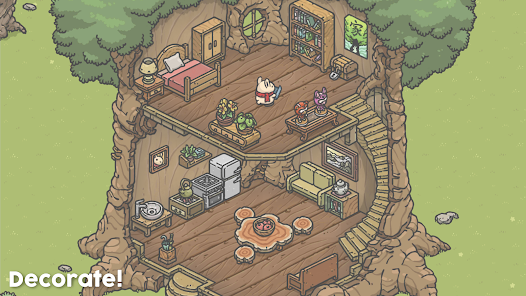
Decorating, arranging, and reading are the parts you do when you have time and interest.
Separating those from the routine keeps the routine sustainable.
A habit that takes an hour is not a habit, it is a session.
That distinction matters because the game is designed around short visits. Production, stock and rewards all run on timers that favour frequent small check-ins over long occasional ones.
A routine that fits that design produces more than an ambitious one that does not.
If you only have two minutes, spend them on the four things and skip the rest.
You will still be keeping up.
Should you do it at the same time each day?
It helps, but it is not required. The game does not care when you visit.
Attaching the routine to something you already do, like a morning coffee, makes it easier to remember.
That is how habits work in general.
But if your schedule varies, visiting whenever you can is fine and loses you nothing.
The game is forgiving by design.
It is worth saying that out loud, because a lot of players carry habits from games that punish absence. They feel guilty about skipping a day and then stop playing entirely.
This game does not require that guilt and does not reward it.
Visit when you can, and the village will be there either way.
What if you miss a day?
Nothing happens. The farm keeps growing, the shop rotates on its own, and the village is unchanged.
You simply collect a bit more next time.
That makes the routine a convenience rather than an obligation.
If you miss a week, the same applies.
This is the most forgiving version of a daily system available.
That forgiveness is what makes a routine possible at all. In a game that punished absence, the routine would become a source of stress, and stress is what makes people quit.
Here the routine is a convenience you use when it suits you.
Skip it for a week and nothing changes except that you have more carrots waiting.
What are the common routine mistakes?
Making it too long. Decorating instead of collecting. Forgetting to check the shops. And treating it as an obligation rather than a convenience.
The underlying mistake is turning a two-minute habit into a project.
If you want a rule, do the four things in the same order and then stop.
Everything else is optional and can happen whenever you like.
There is one more benefit worth noting. A routine gives you a reason to open the game that is not about wanting something specific, which means you notice changes you would otherwise miss.
Seasonal decorations, new stock, a different look to the village.
Those things only get noticed by people who look regularly.
And that is the real argument for a routine. It is not about efficiency or squeezing more carrots out of the game.
It is that regular visits are what let you see a place change over time, which is the whole pleasure of a game like this.
The most useful habit is to do the short tasks first. Collecting rewards and checking the shop take a moment each, and finishing them before the longer ones means nothing expires while you are busy elsewhere.
It also helps to group tasks by where they happen rather than by what they are. Walking the island once to do three things is faster than crossing it three times, and the routine sticks better when it follows the layout rather than a list.
Finally, leave one thing undone on purpose. A routine that fills every minute becomes a chore, and the players who keep playing are the ones who leave themselves something to look forward to tomorrow.
Frequently asked questions
How long should a routine take?
Two or three minutes. Anything longer is decorating.
What order should you use?
Collect, look, then spend.
Does the time of day matter?
No. Attaching it to an existing habit helps you remember.
What happens if you skip a day?
Nothing. You simply collect more next time.
Should you decorate as part of the routine?
No. Keep it separate so the routine stays short.
Collect, look, spend, and let that be the whole routine. You can also start from the Tsuki Odyssey hub.
Official game information: hyperbeard.com.