
This guide covers monument valley 2 chapter 11 walkthrough with practical steps for mobile players.
Quick answer: Chapter 11 is a late scene built around linked mechanisms that must be set in a particular order, so a rotation that looks helpful in isolation can be harmful once the next one is applied. Try each change individually, watch what it moves, and record the order that worked. If two mechanisms seem to fight each other, the answer is usually a third one that unlocks both.
The late chapters in this game share a design philosophy: rather than introducing a new control, they take the three you know and arrange them so that the interaction between them is the puzzle. This chapter is the clearest example of that, and it rewards a methodical, one-change-at-a-time approach over intuition.
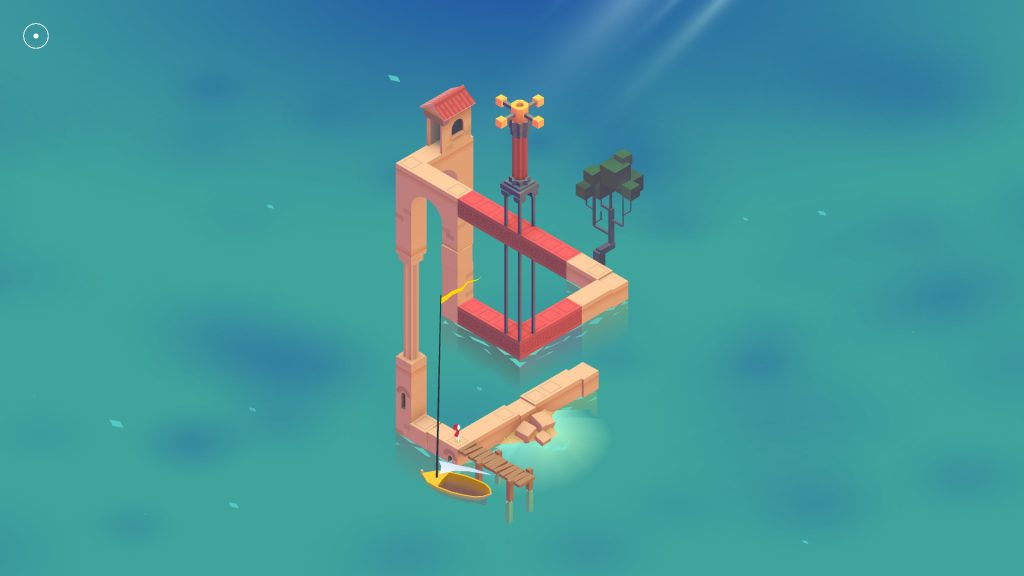
What makes the interactions hard here?
Because the mechanisms are dependent rather than parallel. In earlier chapters you could solve two sub-puzzles independently and both would still be true at the end; here setting one mechanism can invalidate the arrangement the other depended on.
That creates a sense of the structure resisting you, where every fix creates a new problem somewhere else. The feeling is accurate but the cause is not randomness: the mechanisms are in a chain, and the chain has one correct order.
Once you accept that there is an order, the chapter becomes a search for it rather than a struggle against the geometry. You are looking for the mechanism that can be set without breaking anything else, because that one goes first.
On this page
How do you find the right order?
Test each mechanism alone. Change one, look at everything it affects, and then reverse it. That gives you a map of dependencies without committing to an arrangement you might have to unwind.
Then look for the mechanism that affects only things nobody needs yet. That is your first move, because it is the only change that cannot hurt you. After that, reassess, since the set of safe moves changes once the first piece is placed.
Repeat until the route exists. The process is slow but reliable, and it is much faster than trying combinations and hoping one works.
Why does a correct rotation sometimes make things worse?
Because correctness is relative to the state of the other mechanisms. A rotation that would be right in the final arrangement can be wrong now, since it moves a surface into a position that blocks the mechanism you still need to set.
That is why the order matters more than the individual orientations. The same three rotations can produce success or failure depending on which you apply first, even though the final state of each piece is identical.
The practical lesson is to judge each move by what it enables rather than by what it looks like. A move that opens nothing is not progress, even if the structure looks tidier afterwards.
What do you do when two mechanisms conflict?
Look for a third mechanism. In these chapters a direct conflict between two pieces usually means the resolution is somewhere else, often a slider that changes what one of them can reach or a rotation that moves the whole assembly.
If no third mechanism exists, one of the two is not meant to be set yet. Reverse both, set the other one first, and see whether the conflict disappears when the order changes.
And if the conflict persists, check whether the character’s position is part of the problem. Standing on a moving piece can make an arrangement look impossible when it would work from a different platform.
How do you stay oriented in a long chain?
Use the route itself as your record. Every time the character can walk somewhere new, that is confirmed progress, and it tells you which part of the chain is already correct.
Do not try to remember orientations. Remember the order you applied them in, since that is what you may need to reverse, and the structure’s appearance will tell you the rest.
If you lose the thread completely, restart the chapter’s structure by reversing everything and begin the order search again. It sounds wasteful and it is almost always faster than untangling a half-correct chain.
How does this prepare you for the final chapters?
It teaches you to think in terms of dependencies rather than in terms of individual puzzles. The last chapters are built the same way but with more pieces, and the method of testing one mechanism at a time scales to them without change.
It also teaches patience with the structure. Later scenes will look chaotic for longer before they resolve, and knowing that the chaos is a chain rather than a failure is what stops you from thrashing.
Most of all it teaches that the game is never unfair. There is always an order that works, the pieces always reverse, and the only thing that can actually stop you is giving up on the method.
One more discipline worth adopting is to leave the structure in a known state whenever you stop to think. If you are mid-chain and unsure, reverse nothing and change nothing; simply look. The arrangement in front of you is a record of what you have already tried, and disturbing it before you have read it throws away information you paid for.
When you do commit to a change, commit to exactly one. Two simultaneous adjustments produce a result you cannot attribute, and attribution is the only tool you have for finding the correct order in a dependent chain.
One last check before you decide a chain is impossible: confirm the character is not standing on a mechanism you are trying to set. A piece that refuses to turn is sometimes simply occupied, and stepping off it resolves the whole puzzle in one tap.
Frequently asked questions
Is there only one correct order?
Usually one order works cleanly, though some chapters allow a couple of equivalents. The reliable approach is to test mechanisms individually.
Why does a rotation undo my previous progress?
Because the mechanisms are dependent. Some arrangements only hold while other pieces are in a particular state.
Should I restart the chapter if I get confused?
Reverse your changes and start the order search again. That is quicker than untangling a half-correct chain.
Can the character’s position break a solution?
Yes. Standing on a moving piece changes what the structure does, so consider moving them before concluding a puzzle is impossible.
Does the game ever require fast reactions here?
No. Everything can be done at your own pace, and nothing is timed.
Next: the chapter 12 walkthrough, or return to the Monument Valley 2 hub.
Official game information: www.monumentvalleygame.com.